


Ah, the age-old question: which one is more worth it—paid advertising, or organic marketing?
Before we can get into our *official* stance on the debate, it’s important that we establish the difference between paid ads vs. organic traffic.
What is paid traffic? According to SEO guru Neil Patel, paid ads definition refers to “online methods a company uses to attract more customers by paying for ad space on search, other websites, or social media.”
For the sake of this conversation, though, we’re focusing less on social media advertising, and more on all things paid search – aka those first hits at the tip-top of Google before you get down to the organic traffic results.
What is organic traffic? Organic marketing is exactly what it sounds like: creating and distributing valuable content that leads to people finding you organically.
(As in, without the help of paid advertising.)
Any content you post that doesn’t involve paying for visibility can fall under the ‘organic marketing’ category: blog posts, case studies, guest posts, tweets, social media posts, email newsletters…
So, now that we’re all on the same page about what’s what—which option is better: paid ads or organic traffic?
So….Paid Ads or Organic Traffic?
Sorry in advance for this answer, but… it depends.
Specifically, it depends on what your goals are, what your timeline is, how much you’re willing to invest, and what you consider a worthy ROI to be.
We’ll skip over the obvious goal of marketing—increasing brand awareness and getting more eyes on your content—to give you an example of which situation might be best to choose organic marketing vs. paid ads.
Are you hoping to increase email list sign-ups before a big launch?
Are you trying to drive traffic to the landing page of your new product?
Are you in the middle of cart-open for your new online course, hoping to increase sales?
Then use paid ads.
Paid ads are a great way to increase clicks for a time-sensitive goal because they generate instant results. While they are getting more expensive, they’re worth it! In fact, 80% of consumers have admitted they’re more likely to purchase from companies who run paid ads.)
If we’re talking longevity, though…
Compared to paid advertising, organic traffic wins every time—because it creates a permanent traffic source for your website, naturally giving new people the opportunity to get their eyes on your content.
The second you stop paying for an ad, the traction disappears. But when you publish a nice, juicy, value-packed blog post? That could drive organic traffic to your website for years to come.
(We posted this article about How to Write Copy People Actually Want To Read for-ev-er ago, we’re talkin’ back in 2020 which feels like a century ago… and it’s still bringing organic traffic to our site.)

Organic marketing—specifically, organic search—boosts your credibility, attracts relevant users, and costs you nothing.
However, we do have to note: organic marketing can be time-consuming, and it will take longer for you to get results.
It’s no secret that writing one paid ad is a lot less labor-intensive than writing a 2,000-word blog post—but if there’s a possibility of that few hours spent researching and writing making you $$, your time + effort is worth it.
Plus, Google low key loves organic marketing…
Because it’s impossible to talk about paid ads vs. organic traffic without mentioning SEO, let’s dive into discoverability.
If all you cared about were paid ads—and you didn’t take advantage of organic marketing at all—you’d be driving traffic to an empty website, with nothing for those newly-paid-for eyes to see.
“Organic marketing also convinces search engines that your website is relevant to what your audience is looking for,” according to Buffer. “Optimizing all your content assets for search engines will improve your discoverability and lead more qualified customers to you.”
Like we said: organic marketing is about longevity.
Here’s how organic content marketing can get you on Google’s good side:
1) Effortlessly integrated keywords.
Take our blog about why we love Showit, for example. Because we were writing about all the reasons the website builder is so great, it was easy for us to include relevant keywords that we know our target audience is searching for, like “Showit website templates” and “best website design templates” and “switch to Showit.”
2) More content for Google to index.
Aka more reasons for Google to look through your site, and make the equivalent of a “mental note” about what you have to offer, so they can then recommend it to anyone who searches for what you’re writing about.
Every time a new piece of content is added to your site, you’re essentially signaling to Google “hey, c’mere—there’s something new for you to look at!” to which Google will respond “ooh, thanks, I can tell you’re an active site; let me tell all my users to head over there ASAP!”
3) More opportunities to “rank” on Google.
Forgive us for getting all techy on you, but this is a huge reason to add a blog to your site: your website can only rank for a few specific keywords relative to your business, but your blog can rank for hundreds.
Essentially, every time you post something new on your blog, you’re opening that line of communication with Google again, telling them hey, I’d like to rank for *these* keywords now, check me out.
4) Link building.
Another techy thing, but stay with us: including links in your blogs—both to other creators’ websites and different places on your site—lets Google know that you care about making your blog a user-friendly place.
Anything you do to make your user’s experience more enjoyable can earn you a Google Gold Star (we made that up, but it should be a thing, don’t you think?) and signal to the search engine that you’re all in on helping readers get where they need to go faster and easier.
If you think of your blog—or your website in general—as a map, including links is the equivalent of providing your user directions. And Google loves easy-to-follow directions.
Organic marketing isn’t just about blogging, though…
There are plenty of ways you can organically market your business. Our favorites are sending our #longandweird newsletter (by the way, you should subscribe—it’s basically the opposite of every other marketing newsletter ever) and posting on Instagram (specifically about how to effectively market your biz).
Other forms of content marketing can include:
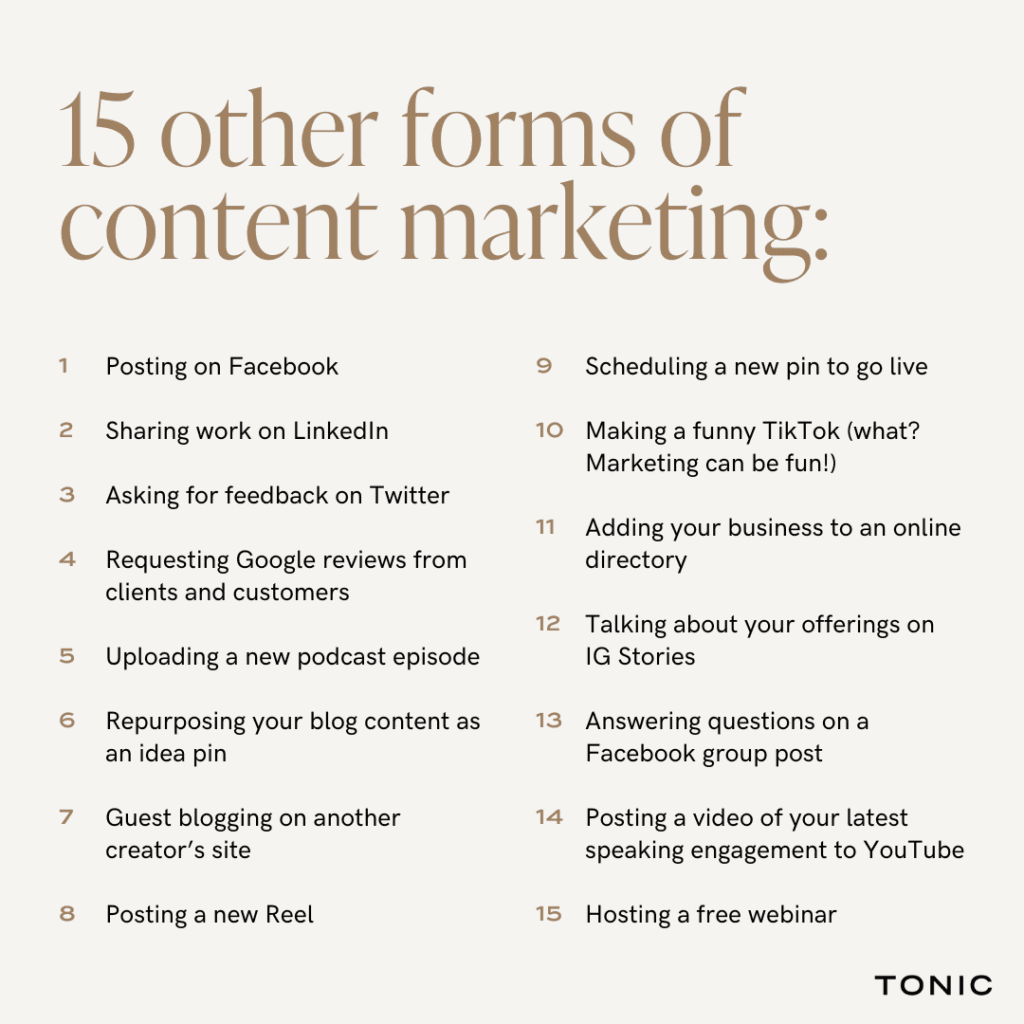
You’ve got options, friend. There’s a content marketing sweet spot out there for everyone—all you have to do is find it.
So… wait—are there any paid ads advantages?
We know we’ve sort of been setting up camp in the “organic is best!” side of this debate, but we definitely do also see benefits of investing in paid search.
The most prominent of which being the fact that organic marketing and paid search work together.
Your paid ads bring the traffic in, but your organic marketing efforts are what make people stay.
If we used Google Ads to get more eyes on our Showit website templates, we’d get more eyes on our Showit website templates. But that doesn’t mean we’d sell them.
We have to do our part in educating why what we have to offer is the solution to the problem that brought them to our website in the first place.
At the end of the day, it’s not really an either-or conversation.
Paid ads and organic marketing efforts each have a place in your traffic generation strategy.
→ Paid ads have great short-term gain, but you need to be willing to allocate some of your funds toward ad spend.
→ With organic traffic content, you don’t need money—but you do need time.
But BOTH options will deliver great benefits for your business, like:
✔️ Delivering an impressive ROI
✔️ Boosting your brand’s awareness
✔️ Introducing your content to new audiences
✔️ Expanding your visibility
So there you have it. Our take on the paid ads vs organic traffic “which is right for you” conversation.
Did you find this helpful? Do you want to hear more about how we use paid ads and organic traffic here at TONIC? Get our SEO strategy that will drive high-quality organic traffic to your website with our Simply SEO Newsletter.